
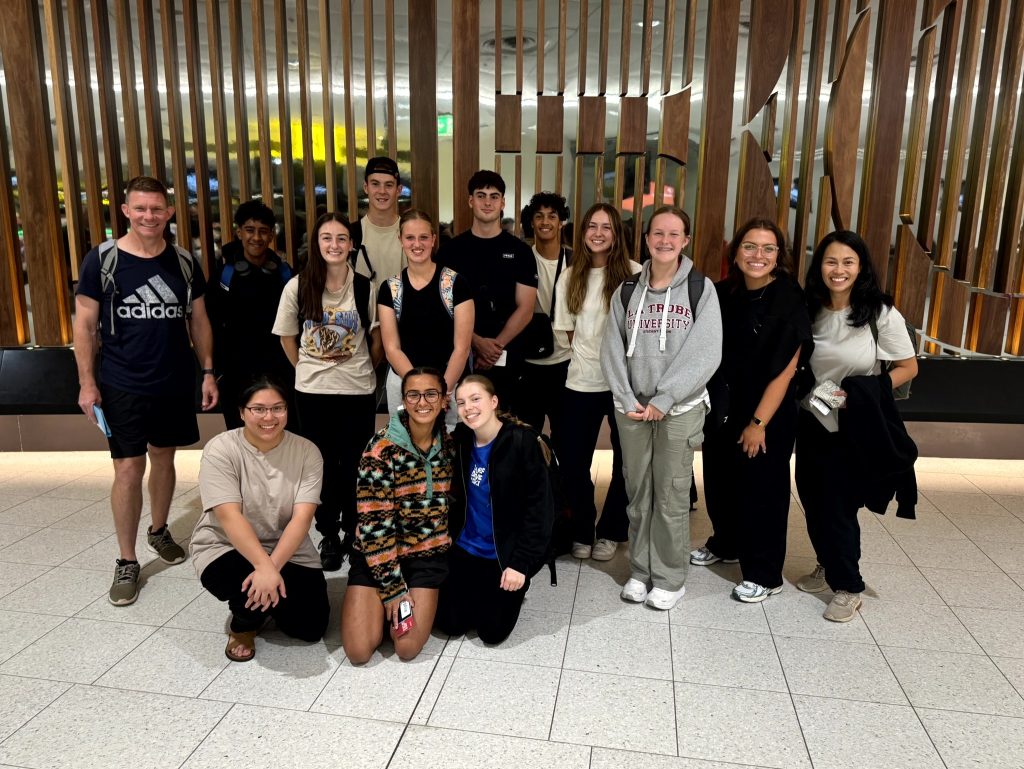
Last year, I had the privilege of being part of the team that took 11 Maranatha students on a cross-cultural experience to Uganda.
While over there, I read a book called The Resilience Project, which highlights the importance of fostering resilience in young people. It got me thinking — how do international experiences create an environment that builds resilience?
Some argue that these trips are costly and that the money could be better spent elsewhere. But I believe the intentional and financial sacrifice to step away from the familiar and immerse yourself in another culture creates a powerful and meaningful experience one that can shape lives far into the future.
As we spent two weeks together in Africa, three key ideas from The Resilience Project stood out to me and connected deeply with our experience:
I came across someone saying this year that that resilience isn’t something people have — it’s something you actually develop. And I believe that’s so true.
So, perhaps we should all ask ourselves: Am I creating environments that give others the opportunity to develop resilience?
When I think about the cross-cultural experiences that Maranatha offers, and why students come home saying, “That was really special,” I believe it’s because these experiences create a space where students must dig deep. They’re stretched, they grow, and they come back changed.
- They practise doing hard things.
- They express gratitude and kindness.
- They build connections and find a sense of belonging.
They experience firsthand what it means to develop resilience — and this becomes contagious to those around them. It’s a spark that inspires and encourages others, a living example of what it means to be salt and light in the world (Matthew 5:13–16). It reflects the character of Christ through resilient discipleship. This is powerful. This is transformation. And I don’t think you can put a price on that kind of experience.

Sarah Kapranov
Head of Senior School Girls - Endeavour
Maranatha Christian School
Rite Journey Hike
Our Year 9 students rose to the challenge last week as they completed their first...
Jun

When is the Right Time for a Smartphone?
In our latest Leadership Blog, Mrs Jenny Rus (Director of Junior School) shares how research...
Jun
CSEN Interschool Cross Country
71 Maranatha students braved tough conditions at the CSEN Cross Country, showcasing teamwork and determination...
Jun

Discovering Strength in Challenge
In our latest Leadership Blog, Mrs Jess De Silva (Head of Middle School) shares powerful...
Jun

Interschool Junior Chess Tournament
Maranatha hosted the Junior Interschool Chess Tournament at Officer, with 80+ students competing across 7...
Jun

Year 12 Formal
Maranatha Class of 2026 recently celebrated their Year 12 Formal with a fun‑filled evening of...
Jun
Young Christian Thinkers Symposium
We are so proud of our Years 9 and 10 students who recently represented Maranatha...
Jun

Officer Campus Update
Read the latest Officer campus update, highlighting a new competition-sized soccer oval and preparations for...
Jun