

An important aspect of our vision statement at Maranatha Christian School is to help our students ‘discover their God-given gifts, abilities and character for a life of service to the Lord in contemporary society’.
This, in part, is facilitated through our teaching and learning programs, however, co-curricular programs like The Rite Journey, among others, also provide opportunities for us to explore this with our students. One component of The Rite Journey Program that allows us to do this is challenges.
Our Year 9s are currently preparing for their first group challenge, our hike at Lerderderg Gorge. A group challenge like this allows us to encourage our students to think about their own personal strengths, while at the same time looking beyond themselves at their contribution to the larger group. Through the physical and mental challenges of the hike, students are encouraged to reflect on their strengths, abilities and resilience. This example, is an intentionally planned challenge that creates opportunities for us to discuss and explore students’ skills and strategies to navigate challenges.
However, in my interactions with young people over the years I have also seen many navigate various real-life challenges in different ways. So, with this as a background, the following three stories will set the stage for further discussion about how we support our young people through challenges, while helping them discover the strengths and abilities they already possess.
When I reflect on these stories and the individuals that I observed experience these situations, these stories echo the belief that we are created uniquely, with our own gifts, strengths and abilities, and ways of responding to the world. The young people in these stories all faced a challenge, and each of them tapped into a different strength to navigate it. In the first story, the young person navigated the challenge by developing a strategy. They didn’t avoid the setback. They analysed it. Their resilience showed up as a strength in planning and problem-solving.
For the young person dealing with a sporting setback, using humour helped to reframe the situation. In doing so, it became a little lighter and an easier burden to carry. Building resilience wasn’t about pushing harder, but about having the ability to reframe a moment. Finally, for the third young person, it was about leaning into connection. Navigating the challenge showed up as being comfortable with vulnerability, seeking support, and choosing repair over retreat.
At Maranatha, through our teaching and learning programs, co-curricular programs, and in our day-to-day interactions with students, our desire is to partner with parents to create and be aware of opportunities where our students can discover the gifts and strengths they already possess, and to support them to develop these further. So how can we do this? One way is by being intentional about noticing the strengths our young people demonstrate and naming these with them. When we do this, we give our students language to articulate the character strengths within them and encourage them to draw on these qualities when challenges arise.
Similarly, when they are struggling with a challenge, instead of trying to fix the problem, we can remind them of the strengths they have already shown and help them use them in purposeful ways. In doing so, my hope is that we will grow a generation of young people who recognise their God-given abilities to respond to challenges with increasing confidence, and use their strengths to serve others and contribute meaningfully to the world around them.

Jess De Silva
Head of Middle School
Maranatha Christian School

A Time for Formation Before a Time for Technology
Our latest Leadership article by Mrs Jenny Rus, Director of Junior School, explores why delaying...
Sep

Empathy: Learning to Understand Others, so We May Love Well.
Our latest Leadership Article Mrs Dutlow, Head of Endeavour Hills explores how empathy shapes relationships,...
Sep

Prep Healesville Excursion
Maranatha Prep students visited Healesville Sanctuary, where they encountered some incredible creatures and discovered more...
Sep
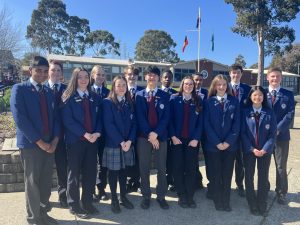
Leadership Assembly
Maranatha inducted our School Captains, Senate members, and student leaders for 2027, while also thanking...
Sep
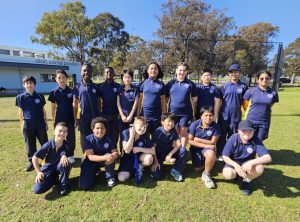
Year 6 Gala Day
Our Year 6 students recently represented Maranatha at the Year 6 Gala Day, participating in...
Sep
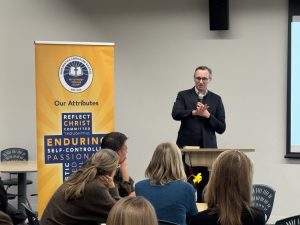
Association Dinner
Maranatha Association Members came together for their annual dinner. The highlight of the evening was...
Sep
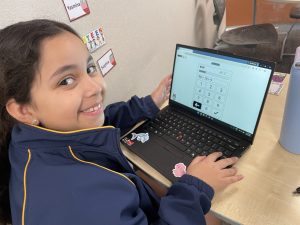
Year 5 Oz Rocks Competition
Year 5 students have achieved outstanding results in the recent Oz Rocks competition, a national...
Sep

Wellbeing Week 2026
Across our Maranatha campuses this week, students will be exploring the many aspects of wellbeing...
Sep