
I found myself captivated during the recent Winter Olympics early this year. Snowboarders launching into gravity-defying flips. Skiers racing down icy slopes at breathtaking speeds. The courage. The precision. The sheer audacity of it all.
One moment in particular stayed with me, watching Hiroto Ogiwara launch out of the halfpipe at the X Games Aspen. He came in with serious speed, flew metres above the edge of the pipe, and then did something no one had ever landed in competition before , a 2340-degree spin. That’s six and a half full rotations in the air. (Trust me, take a minute to search for this online and watch the video now. You’ll see what I mean.)
Think about that for a second. Spinning six and a half times while that high off the ground. In just a few seconds. At that speed. One small mistake in timing, balance, or body position could have ended in a heavy crash. But he stayed calm, kept control mid-air, spotted his landing, and rode away clean. It was bold. It was brave. It was history-making.
And as I watched, I couldn’t help but wonder: how does someone train themselves to do something that extreme and make it look almost easy?
Naturally, I fell down the rabbit hole: How does someone become an Olympic athlete? What does training actually look like?
The answer is far less glamorous than the highlight reel.
What It Really Takes
To become a professional snowboarder, let alone an Olympian, training begins years before anyone sees their name on a broadcast screen.
A typical elite snowboarder’s week includes; 4 to 6 days on snow, drilling the same tricks repeatedly, strength and conditioning sessions focused on explosive power, balance, and injury prevention, mobility and recovery work to sustain longevity, video analysis to refine technique frame by frame, mental performance coaching to build resilience and focus, and strict nutrition and recovery routines
They fall hundreds, sometimes thousands, of times. They repeat the same movement until muscle memory takes over. They train in off seasons. They compete without podium finishes. They sacrifice social events. They endure injuries.
And for most of those years, there is no spotlight. No medals. No applause.
Just repetition. Just discipline. Just consistency.
The Myth of Overnight Success
We live in a world that celebrates viral moments and instant results. We are bombarded with stories of sudden breakthroughs and rapid success. It’s easy to believe that achievement should be quick and effortless. But Olympic athletes dismantle that myth.
It takes years of intentional effort and steady commitment to even qualify for an Olympic team, and even more to reach the podium. Unlike many professional sports where each game brings immediate feedback and financial reward, the Olympic journey often offers little short-term validation. An athlete may train relentlessly for four years for a performance that lasts less than two minutes.
The journey demands, clear vision, daily deliberate choices, minimising distractions, discernment about what aligns with the goal, and what doesn’t, and showing up when motivation fades
Consistency is not glamorous. It is quiet. It is often unseen. But it is powerful.
The Quiet Discipline Behind the Glory
We see the jumps and the flips. We admire the courage and bravery on the slopes. But just as courageous, perhaps even more so, is the quiet decision to wake up early for training. To repeat drills when no one is watching. To keep going after falling. To stay committed when progress feels slow.
Scripture speaks to this principle in a way that feels deeply aligned with the Olympic mindset. “Let us not grow weary in doing good, for at the proper time we will reap a harvest if we do not give up.” Galatians 6:9. There is a biblical rhythm to consistency. Seed. Time. Growth. Harvest. No harvest appears overnight.

Sarah Kapranov
Head of Senior School
Maranatha Christian School
Monash Youth Music Festival Choral Competition
Maranatha students had a wonderful day of music, growth and achievement at the Monash Youth...
Aug
Arts Night Rehearsals
Featuring performances from Maranatha students across ELC to Year 6, this year's theme, "Be Courageous:...
Aug

Creating a Culture for Children to Thrive
In our latest Maranatha Leadership Blog, Mrs Kelly North, Head of Junior reflects on the...
Aug
Year 11 Biology Excursion
Discover how a hands-on Biology experience helped our Year 11 Science students connect classroom learning...
Aug

Book Week
From colourful character parades and very special author visits to creative writing masterclasses and live...
Aug
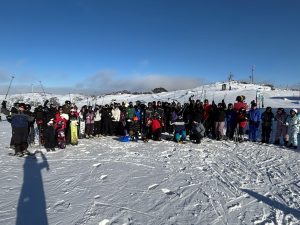
Year 10 Snow Camp
Maranatha Christian School's Year 10 Snow Camp at Falls Creek, where students developed confidence, resilience...
Aug
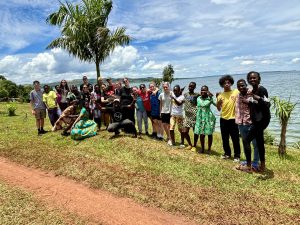
Go the Extra Mile
This August, Maranatha Christian School is partnering with HopeBuilders International for the Go the Extra...
Aug
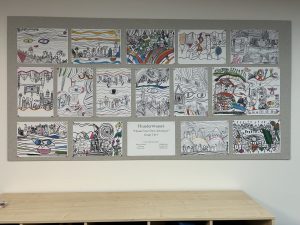
Artist of the Month
Congratualations to our Artist of the Month from our Endeavour Hills and Officer campus.
Aug