

Above all, love each other deeply, because love covers over a multitude of sins. Offer hospitality to one another without grumbling. 1 Peter 4:8–9 (NIV)
The Bible is peppered with encouragements and directions about how to live in community with one another.
Yet the biblical vision for community marked by love, hospitality, accountability, and presence, often stands in tension with the shifting norms of a digital age. As technology mediates more of our interactions, our understanding of connection is being reshaped. Screens offer immediacy and access, but not necessarily depth, accountability or transformation. For young people especially, whose identities are still forming, this brings both opportunity and risk. The challenge for Christian families, schools, and churches is to help re-anchor students in a vision of community that reflects God’s design: one that prioritises presence over performance, relationship over reach, and formation over followers.
While debate around the role of social media and gaming in youth wellbeing is not new, what distinguishes the current discourse is the growing body of empirical research that supports claims of digital overexposure and its psychological, relational, and behavioural consequences. The long-held assumption that online behaviour exists in isolation from real-world conduct is becoming obsolete. Evidence suggests that the norms and messages young people encounter in digital environments are increasingly shaping their offline identities, social interactions, and value systems.


Recent headlines have drawn attention to concerning manifestations of this shift, such as The Vape Dilemma which discusses the way online influencers push a narrative of the positives of vaping in the face of research and the law. Sunday night’s, 60 Minutes episode discussed the influence of online personalities like Andrew Tate on our young men and impact on young women. And there are countless other examples of how the online, is at times driving the offline realms.
Jonathan Haidt in his powerful and evidence-driven book, The Anxious Generation: How the Great Rewiring of Childhood Is Causing an Epidemic of Mental Illness, notes that there has been a “great re-wiring of childhood”. The sentiments of the book are echoed by Australian Psychologist Dr Michael Carr-Gregg, and further corroborated by Dr Justin Coulsonwhen he visited earlier this year. All advocate for reduced screen time, unstructured play and moments of connectedness. Unsurprisingly they also acknowledge the importance of “spirituality”, and in recognising there is something bigger than us.
Koinonia is Greek for fellowship and occurs 20 times in the New Testament. It personifies authentic connection beyond the superficial and grounded in faith. It acknowledges God in the centre of community. Communities of faith are recognised for their positive influence on resilience and emotional connection, not only in Christian spheres, but also in secular. It is a counter to the negative and strengthens networks of people to ensure a sense of security and belonging.
The paradox of the online world is such that it often offers connection without true community, presence without accountability, and expression without formation. The Gospel however, calls young people into embodied community, where identity is shaped not by algorithms, but through love, truth, and belonging. As a school grounded in faith, we affirm the call to nurture students in environments where their whole selves can flourish in authentic relationship with God and others.

Candice Thornton
Director of Teaching and Learning
Maranatha Christian School
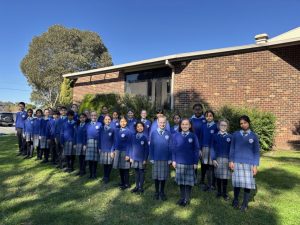
Monash Youth Music Festival Choral Competition
Maranatha students had a wonderful day of music, growth and achievement at the Monash Youth...
Aug
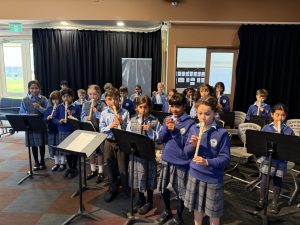
Arts Night Rehearsals
Featuring performances from Maranatha students across ELC to Year 6, this year's theme, "Be Courageous:...
Aug
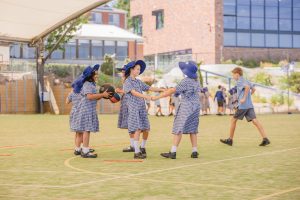
Creating a Culture for Children to Thrive
In our latest Maranatha Leadership Blog, Mrs Kelly North, Head of Junior reflects on the...
Aug

Year 11 Biology Excursion
Discover how a hands-on Biology experience helped our Year 11 Science students connect classroom learning...
Aug

Book Week
From colourful character parades and very special author visits to creative writing masterclasses and live...
Aug
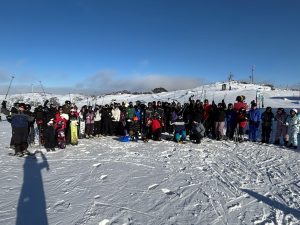
Year 10 Snow Camp
Maranatha Christian School's Year 10 Snow Camp at Falls Creek, where students developed confidence, resilience...
Aug
Go the Extra Mile
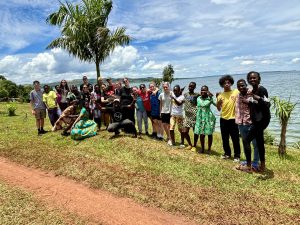
This August, Maranatha Christian School is partnering with HopeBuilders International for the Go the Extra...
Aug
Artist of the Month
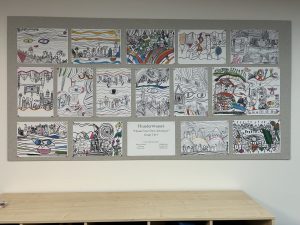
Congratualations to our Artist of the Month from our Endeavour Hills and Officer campus.
Aug