
This year, National Reconciliation Week (27 May – 3 June) has been meaningfully embraced across our school community, as we reflected on the 2026 theme, “All In.”
Across our Junior classrooms this week, there has been a gentle shift in the kinds of conversations taking place in everyday learning. Students have been gathering together, listening carefully to one another, and sharing their ideas as they explore what it means to be kind, fair, and inclusive in their relationships with others.
As part of these experiences, students have created “I’m All In” and “We’re All In” commitments. Through both words and drawings, they have expressed practical ways they can show love, include others, and act with compassion in their daily lives.
Through short devotions led by teachers, students have been reminded of God’s heart for justice, kindness, and right relationships. These have been simple yet powerful pauses in the day, helping students understand that reconciliation is not just something we talk about, but something we are called to live out.
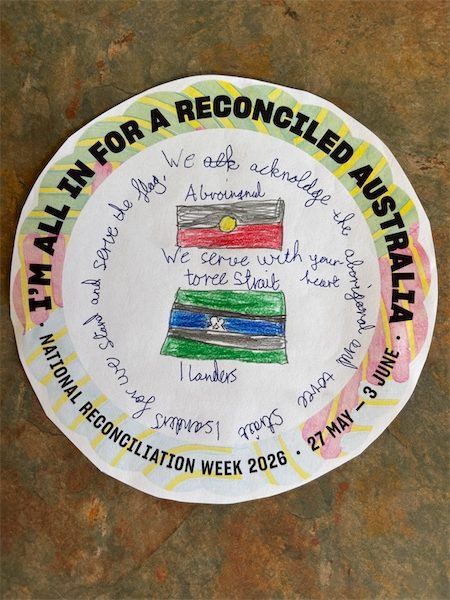
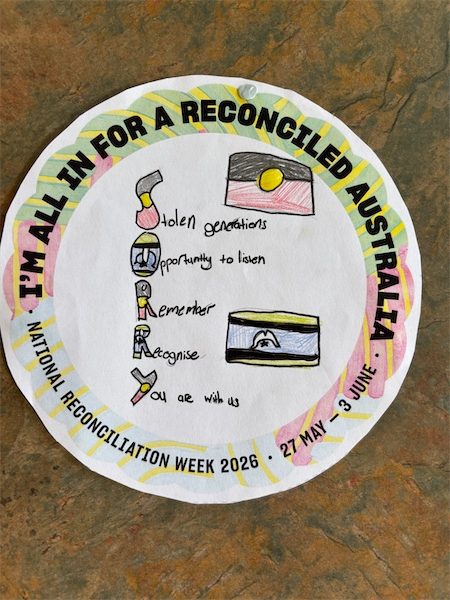
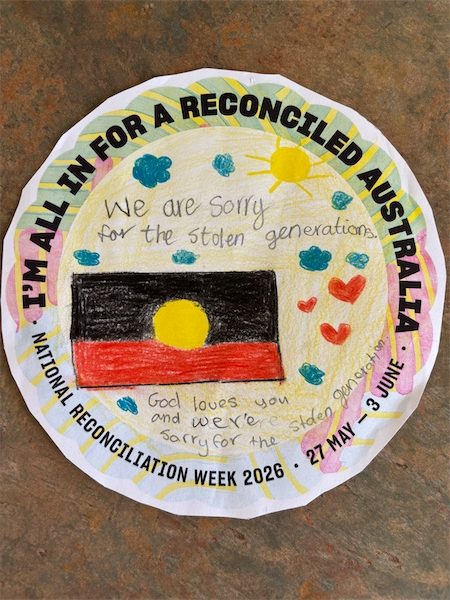
In Secondary School, Reconciliation Week was explored through Home Group, Mentor Group, and Wednesday devotions. Students looked at “Why the need for Reconcillation with Indigeneous people”, the 2026 theme “All In,” and the role each person can play.
Reconciliation reflects God’s nature, marked by forgiveness, restoration, and unconditional love. Students were encouraged to pursue peace through kindness, grace, and understanding, even when it is challenging, and to actively learn how we can walk alongside our Indigenous brothers and sisters. They were also challenged to see that their age is not a limitation, but that growing in knowledge equips them to stand against discrimination and pursue unity.
Middle School assembly reflected on an artwork by Safina Stewart inspired by Amos 5:24, exploring God’s call for justice to flow through both our hearts and actions, working together as a community where things are made right.

Senior school assembly on reconciliation, justice, and peace, considering both global contexts and everyday relationships. Students reflected on their role in fostering fairness, inclusion, and restoration within their community, and were reminded that reconciliation requires courage. Choosing to act, even when it is difficult, and to carry the needs of others as their own.
The time concluded with a shared prayer by St. Francis of Assisi, acknowledging our collective responsibility to build a community shaped by reconciliation, justice, and care for one another.
Lord, make me an instrument of your peace:
where there is hatred, let me sow love;
where there is injury, pardon;
where there is doubt, faith;
where there is despair, hope;
where there is darkness, light;
where there is sadness, joy.
O divine Master, grant that I may not so much seek
to be consoled as to console,
to be understood as to understand,
to be loved as to love.
For it is in giving that we receive,
it is in pardoning that we are pardoned,
and it is in dying that we are born to eternal life.
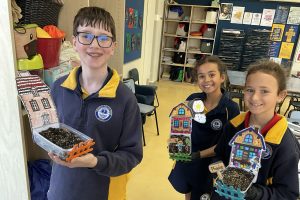
Junior Clubs
Explore the Junior School Clubs Program at Maranatha Christian School, where students build confidence, develop...
Jul

High School Musical Production
Maranatha Secondary students are back on stage with this year’s production of High School Musical....
Jun

Combined Junior Awards Assembly
Our Junior School Awards Assemblies were held across both campuses, celebrating the outstanding efforts of...
Jun
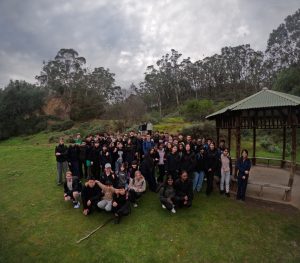
Rite Journey Hike
Our Year 9 students rose to the challenge last week as they completed their first...
Jun
When is the Right Time for a Smartphone?
In our latest Leadership Blog, Mrs Jenny Rus (Director of Junior School) shares how research...
Jun
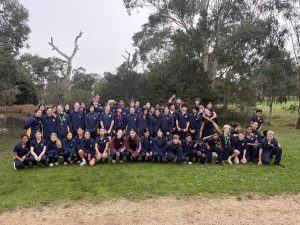
CSEN Interschool Cross Country
71 Maranatha students braved tough conditions at the CSEN Cross Country, showcasing teamwork and determination...
Jun
Discovering Strength in Challenge
In our latest Leadership Blog, Mrs Jess De Silva (Head of Middle School) shares powerful...
Jun
Interschool Junior Chess Tournament
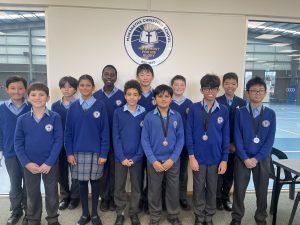
Maranatha hosted the Junior Interschool Chess Tournament at Officer, with 80+ students competing across 7...
Jun